

Dubai Loop takes shape as RTA partners Elon Musk’s company at WGS 2026
Pilot route to link DIFC and Dubai Mall with four underground stations
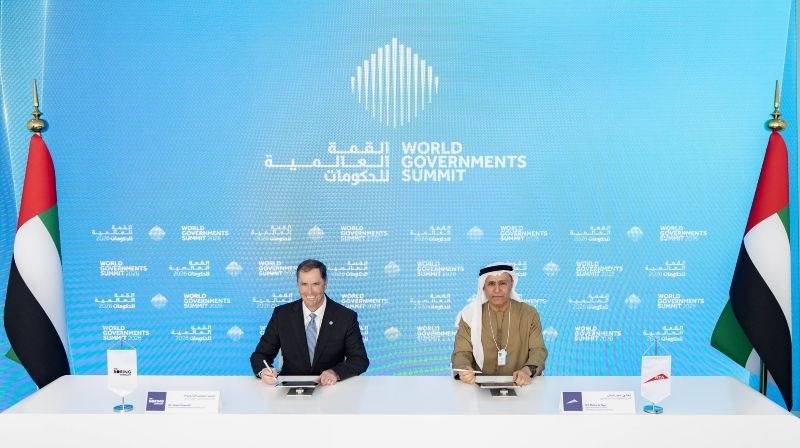
DUBAI – Dubai has taken a significant step towards expanding its next-generation transport infrastructure with the signing of a strategic partnership agreement between the Roads and Transport Authority and US-based The Boring Company.
The agreement, concluded on the sidelines of the World Governments Summit 2026, marks the formal commencement of implementation of a high-capacity underground passenger transport system branded Dubai Loop. The project is positioned as a new addition to the emirate’s growing portfolio of advanced mobility solutions aimed at easing congestion and improving connectivity in key urban districts.
The agreement was signed by Mattar Al Tayer, Director General and Chairman of the Board of Executive Directors of the RTA, and James Fitzgerald, Global Vice President of Business Development at The Boring Company, in the presence of senior officials from both entities. The partnership follows an extensive study phase conducted over the past year to assess technical, environmental, and operational requirements for the system.
Dubai Loop
Under the agreement, implementation will begin with a first-phase pilot route extending 6.4 kilometres. This initial section will comprise four underground stations and will connect the Dubai International Financial Centre with Dubai Mall, two of the city’s busiest commercial and tourism zones. The pilot is intended to serve as the foundation for the wider Dubai Loop network.
The full project alignment is planned to extend up to 22.2 kilometres and include 19 stations. Once completed, the network will connect Dubai World Trade Centre and the financial district with Business Bay, creating a continuous underground corridor linking major employment, retail, and event hubs.
Tunnel design
Dubai Loop will involve the construction of tunnels with a diameter of 3.6 metres, dedicated to vehicle-based passenger transport. According to the RTA, the tunnels will be developed using advanced tunnelling technologies that allow faster construction timelines, lower overall costs, and reduced disruption to existing roads and underground utilities when compared with conventional transport projects.
These technologies are designed to support high-frequency operations while maintaining safety and operational efficiency. The system is expected to integrate with Dubai’s wider transport ecosystem, supporting first- and last-mile connectivity and complementing existing public transport modes.
Costs
The cost of implementing the first phase of the Dubai Loop is estimated at approximately Dh565 million. Delivery of the pilot route is anticipated to take around one year following the completion of design works and preparatory requirements. For the full network, total implementation costs are estimated at around Dh2 billion, with an expected delivery period of approximately three years.
The RTA has indicated that the phased approach will allow operational performance to be evaluated before the network is expanded to its full planned alignment.
Capacity
Mattar Al Tayer said the project represents a qualitative addition to Dubai’s transport system, enhancing integration between different mobility modes while offering flexible solutions for high-density areas. He noted that studies carried out during the planning phase demonstrated strong efficiency in terms of both capacity and operating costs.
According to the RTA, the pilot route is expected to serve around 13,000 passengers per day. Once fully developed, the Dubai Loop network is projected to accommodate approximately 30,000 passengers daily, providing a new high-capacity option for movement between key commercial districts.
Al Tayer added that the agreement aligns with directives to strengthen partnerships with global technology leaders and supports Dubai’s ambition to remain at the forefront of future mobility adoption. He said the project contributes to improving quality of life and facilitating movement for residents and visitors, while keeping pace with the emirate’s rapid urban and economic growth.
Steve Davis, President of The Boring Company, said the company was proud to partner with the RTA, describing Dubai as one of the world’s leading adopters of innovative transport solutions. He said the partnership aims to deliver advanced, safe, and efficient tunnelling systems that support Dubai’s vision for sustainable mobility.
Study phase
The agreement builds on a memorandum signed during last year’s World Governments Summit, under which the RTA and The Boring Company conducted detailed studies into the project’s feasibility. During this phase, the RTA provided geotechnical data, details on utilities and structures, environmental risk assessments, and information on transport standards adopted in Dubai.
The Boring Company, in turn, submitted technical studies, safety documentation, and development proposals for the system and proposed alignments. These were prepared in collaboration with international consultancies and under the supervision of financial and legal advisers, with the aim of identifying the optimal partnership and delivery model for the Dubai Loop project.